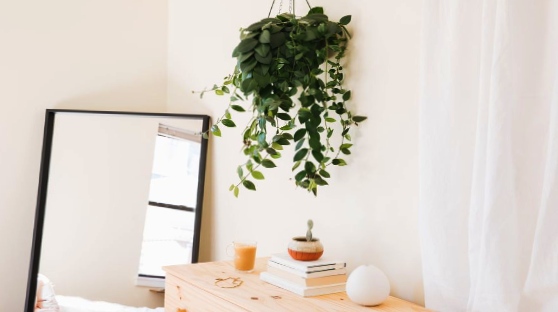
Think pothos plants are just another houseplant? Wait until you discover the secret ways this vine can transform your space and your small garden like magic. Many people choose fancier plants, such as orchids, but pothos is just as beautiful in its own way due to its variegated leaves. It’s almost impossible to kill, so even beginners can easily grow it.
Pothos plants are a tropical, long-vining plant native to the Solomon Islands in the South Pacific, grown as a ground cover or climbing tree. Easily trained to climb up surfaces with the help of aerial roots, which makes pothos great for hanging baskets.
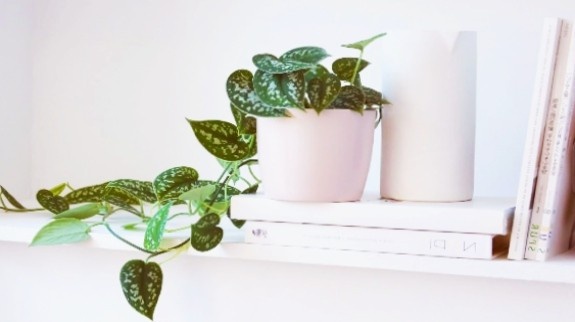
Pothos plants are fast-growing plants. Another advantage of pothos is that it works like an air cleaner for removing pollutants. Best for beginners to grow, as they can tolerate small neglect. Perfect for low-light rooms, as they need indirect light.
Categories and Types of Pothos
Pothos plants have many types and varieties, but I summed them up into three varieties in three categories. These categories are:
Green and Solid Leaf Varieties
Pothos plants that fall in this category are the hardiest and low-maintenance types of pothos. Leaves are usually a deep, solid green without variegation, which makes them more tolerant of low and indirect light conditions compared to variegated varieties like Jade Pothos.
Variegated Varieties
Variegated pothos are loved for their beautiful mix of green with colors like white, cream, or yellow patterns on the leaves. Due to this ability, these plants, like Golden Pothos and N’Joy Pothos, are used for decoration.
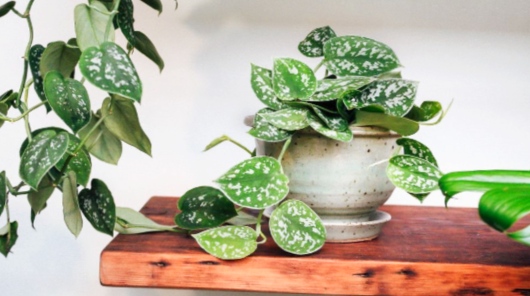
Unique Varieties
Want to grow something different and unique? These varieties are different from Variegated Varieties and Green and Solid Leaf Varieties due to their unusual colors and textures. Their growth patterns make them highly attractive to plant lovers who want something different.
Jade Pothos
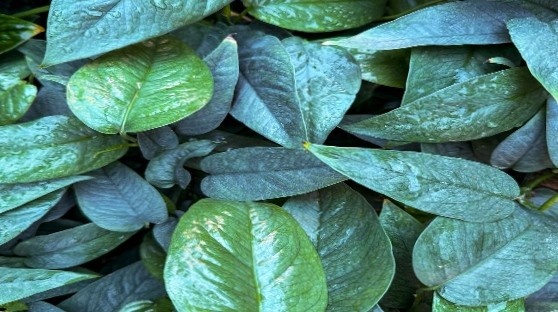
Jade Pothos falls in the category of Green and Solid Leaf Varieties and has particularly thick, dark, shiny green leaves with strong stems. These tough vining plants look great on shelves or hanging baskets and adapt to various light conditions.
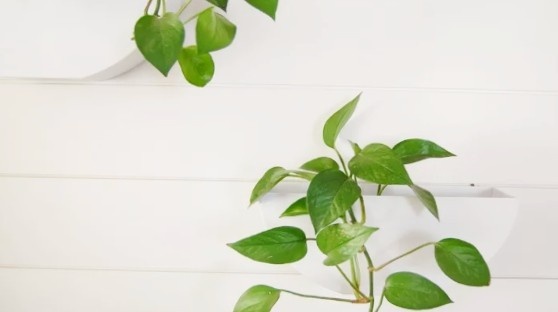
Jade pothos are extra drought-resistant and grow well in moist soil, but they should be well-drained. Poorly drained soils can cause root rot. The Hardiness Zones are 10-12 (USDA).
Cebu Blue
Cebu Blue, originating from Cebu Island in the Philippines, is loved for its thin, silvery green-blue leaves that make it a striking indoor addition. Cebu blue pothos rarely flowers indoors.
When to plant Pothos
Timing is everything, especially when it comes to giving your Pothos the perfect start in life. However, planting them at the right time can have a good effect on plant growth and health. The best time to plant pothos is during the spring or early summer.
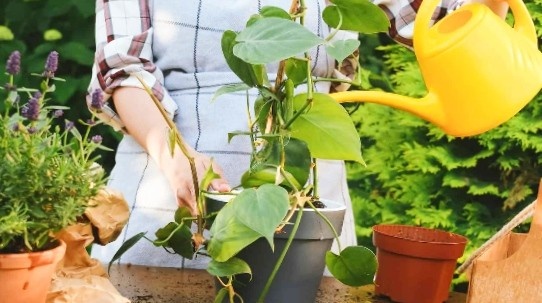
- If you are planting outdoors, avoid planting them during cold months because they are sensitive to frost. They need temperatures above 60°F.
- If you are planting indoors, you can grow anytime because you can control light, temperature, and humidity.
- By planting at the right time, you give your pothos a healthy environment to grow healthy and vibrant for years to come.
- Grow your pothos plants near a window or a spot that receives bright indirect light and avoid cold drafts.
Warning: Pothos Can Be Invasive Outdoors
While pothos is beautiful in homes, growing outdoors in tropical or subtropical climates, it can become a problem. Vines grow aggressively and climb up and overtake trees, so they can harm your native plants.
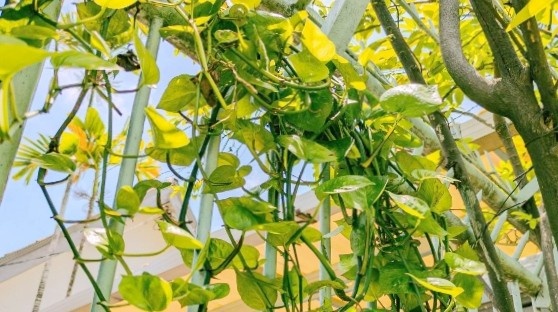
Check your extension service to know which variety is Invasive in your climate, grow them in pots or containers as an indoor houseplant to enjoy their beauty.
Pothos Pruning
Pruning is essential for encouraging healthier, fuller plants and maintaining plant shape and size. It also encourages new growth. Pothos plants can grow up to 12 to 18 inches in a month.
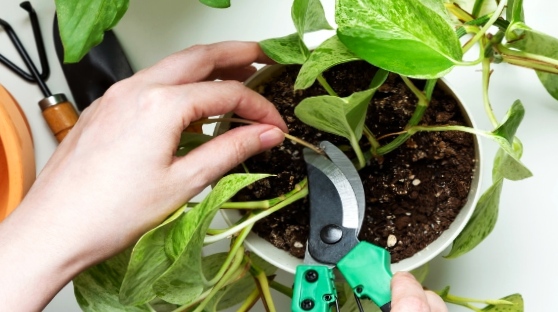
Thinking about how to prune? Don’t worry, trimming pothos plants is simple and easy. If you have a large vine. You can cut them as much as you want. You cut the vine above the node; leaf nodes mean the point from where the leaf emerges.
Don’t cut too deep across the soil level; you can cut them 2 to 5cm above the soil, so the plant can regrow. Prune pothos at least once a year.
Pothos for the Winter seasons
You have a Pothos? Your plant growth slows in the winter, between October and March, because pothos plants need temperatures above 16°C. You have to provide them with their temperature to grow well. Take your Pothos indoors during too much cold or frost.
During the winter season, plants don’t need fertilizer because of their slow growth caused by low light.
Do Pothos Plants Flower?
The most frequently raised question is, Do pothos plants bloom? Pothos plants belong to the Arum family. This family with 3500 species contains all of the flowering plants, such as philodendrons, monstera, taro, and peace lilies.
Belonging to the flowering family means pothos are flowering plants. However, you have mostly seen them as leafy houseplants.
Your pothos can be a flowering plant, but only under the right conditions. In tropical rainforests, pothos grow too large to climb up huge trees, reaching plenty of light and space.

Pothos plants never produce flowers indoors; they remain as a houseplant because the plant didn’t get enough space, nutrients, and a tropical climate to reach maturity. They reach their maturity at the age of 10 years.
Once your pothos is mature, it will produce creamy, spathe-shaped flowers. Pothos flowers are not as beautiful as orchids and lilies, but they are unique and striking in their own way.
Should You Cut Yellow Leaves Off a Pothos?
Low-maintenance houseplants they’re usually lush and green, but sometimes you’ll notice their leaves turning yellow. Yellow leaves can be a sign of a problem, or they can be normal.
Time to remove yellow leaves
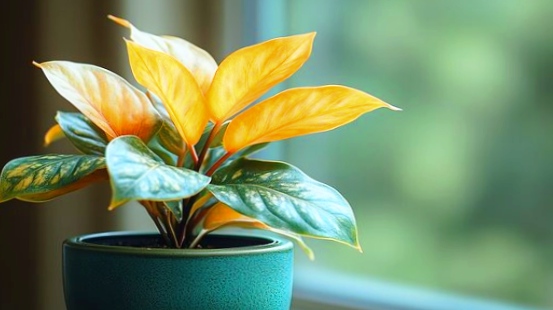
You can only remove completely yellowed pothos leaves. If there are still some green spots in yellow leaves, the plant is still using that leaf to make energy. Once it turns fully yellow, you can gently remove the yellow leaves.
Reason turning yellow
- Yellow leaves are not always a reason to panic. Sometimes it’s normal, as it’s the life cycle or natural aging, and sometimes a sudden change can cause stress.
- Too much watering and underwatering can also cause your plant to turn yellow and develop root rot.
- Yellow leaves can be caused by light stress means not having enough light.
Pothos care is essential to enjoy your plant’s beauty for a long period of time. Learn more about pothos care.
Summary
Pothos plants are loved for their fast-growing vines, their beautiful foliage, low-maintenance care, and air-purifying qualities. These are native to tropical climates and thrive well in indirect light and tolerate neglect.
Pothos plants are available in dark green, variegated, and unique varieties, as 2 are discussed above. They can be grown indoors year-round, but should be planted outdoors in spring and early summer.
Pothos can become invasive in warm climates with direct light. Pruning encourages plant growth and rarely produces flowers if you provide your plant with a forest environment. Yellowing leaves are natural, but can also be a signal of stress.
FAQs
Is pothos a good indoor plant?
Yes, pothos is a good indoor plant. You can also plant them indoors in pots and containers. Place them across the spot where they can get enough indirect light.
Can I grow pothos in a fish tank?
Yes, you can grow pothos in a wish tank if your fish or aquatic pets are not plant killers. Pothos absorbs toxic nitrogen from the water.
Do pothos like humidity?
Yes, pothos plants enjoy humidity because they naturally come from tropical rainforests, where the air is moist and warm. They grow best in humidity from 50 to 70%, but they can also survive below it.
Do pothos do well in bathrooms?
Yes, in some areas where there is less humidity, you can grow or hang them in baskets for their required humidity.
