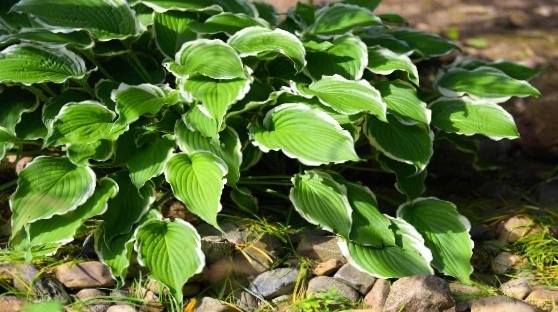
When planning a garden, most people think of flowers first. But the leaves of foliage plants are just as important and often overlooked. Leaves can bring color, texture, and interest to your garden throughout the year, as many annuals, perennials, shrubs, and trees offer beautiful foliage.
Different foliage plants with varying roles in the garden. Some foliage plants have bold shapes, some display unique patterns and striking colors. Certain varieties display brilliant fall color and change their hues as the season progresses.
Not all foliage plants are green, as they come in different colors and shades like purple, red, silver, yellow, and even combinations of colors. Some varieties are more prized for their leaves than their flowers.

The key is to consider how different foliage plants will complement each other in a garden. By choosing the right plant with diverse colors and patterns, you can make a garden that looks vibrant and interesting all season long.
Temperature
- Most foliage plants grow best in temperatures between 16 and 27°C. If the temperature drops below 10°C, tropical plants can suffer damage, showing curled leaves, spots, or stunted growth.
- In cold climates, leaves may curl down or grow slowly.
- In hot climates, Leaves may turn yellow-green, get dry brown edges, or grow weak. Pests and diseases also spread faster in very warm conditions.
Humidity
Tropical foliage plants love high humidity up to 80% in nature. Low humidity can cause brown, dry leaf tips. To raise humidity indoors, you can:
- Plant them together.
- Use a room humidifier.
- Keep the plant far away from overheated spots.
- Make sure plants are watered properly.
Soil
Healthy roots mean a healthy plant. For this, you have to use the best soil for the plant, as water and oxygen are essential for roots. So the soil drains well but also holds moisture.
A simple mix is:
- 1–2 parts potting soil
- 1–2 parts moistened peat moss
- 1 part coarse sand
Calathea Plant
Calatheas are tropical plants with large, paddle-shaped leaves. The undersides of leaves can be shades of purple or burgundy. Some varieties even have velvet-like textures. A fun feature is their “prayer plant” movement, leaves open during the day and fold upward at night.
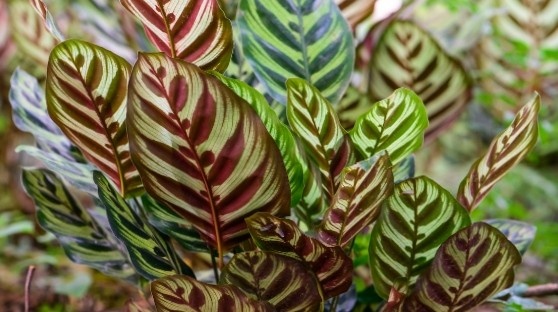
There are around 60 species of Calathea. Popular species are Calathea orbifolia, Calathea makoyana, Calathea ornata, Calathea lancifolia, and Calathea veitchiana.
Plant Type
- Evergreen tropical perennial
- Grown mainly as a houseplant in most regions
Zones
- Everywhere else, they’re grown as indoor houseplants.
Exposure
- Prefers bright, indirect light and partial shade.
- Direct sunlight burns leaves and fades their patterns.
Habit
- Clump-forming growth.
- New leaves emerge rolled up and unfurl as they mature.
- Known for “nyctinasty” as leaves unfurl during the day and fold at night.
Height and Spread
- Height 1–3 feet, depending on variety, and Spreads 1–2 feet wide.
- Moderate growth rate when happy.
Why We Love It
- Calathea have bold, colorful, patterned leaves that look like living artwork.
- Non-toxic to pets and kids and adds a lush, jungle-like vibe indoors. Fascinating nightly leaf movement.
Season
- Grown year-round as a houseplant. Bloom can appear in the wild, but indoors, they are mostly loved for their foliage.
- The active growing season is spring through summer. Growth slows in fall and winter.
Dracaenas
Dracaenas are tropical foliage plants, which means they love warm climates, moisture, and the right kind of soil. To keep them healthy indoors, it’s necessary to give them conditions that feel a little like their natural homes in Africa, Asia, and other warm regions.
Fluoride and salts that can burn the leaf tips. Never let the pot sit in standing water. Good drainage is essential.
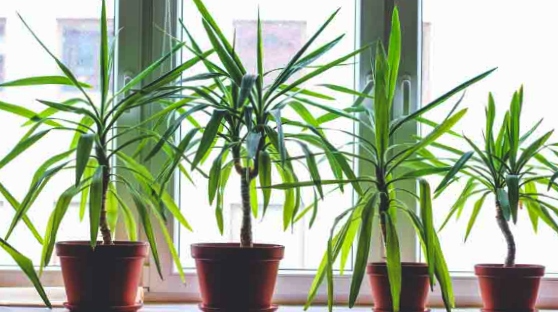
Dracaenas are tropical plants with long, strap-shaped leaves that can be solid green or striped. Comes in different colors like yellow, cream, red, or purple. Most grow on tall, cane-like stems or form rosettes of glossy leaves. Indoors, they bring a fresh tropical look, and large ones act as striking focal points in a room.
There are around 200 species of Dracaena; the most popular are Dracaena fragrans, Dracaena marginata, Dracaena sanderiana, Dracaena draco, and Dracaena draco.
Plant Type
- Shrubs or small trees; Strap-shaped evergreen broad leaves, grown mainly as indoor houseplants in cooler climates.Zones
- Hardy in zones 10–12, so they mostly grow indoors in cooler regions.
Exposure
- They prefer bright, indirect light, though many species tolerate low light.
Habit
- Upright and cane-like with tufts of leaves at the top, or shrub-like with bushy growth.
- Some grow straight, while others branch if cut back.
- Outdoors in tropical habitats, it can reach 20 feet or more.
Height and Spread
- Grow 2–10 feet tall indoors, usually no more than 2 feet spread.
Why We Love It
- Low-maintenance, easy to grow, and air-purifying.
- Brings a tropical vibe indoors.
- Comes in many shapes and colors to fit any decor.
Season
- Evergreen dacaenas keep their leaves year-round.
- They provide beauty in every season.
- In warm climates outdoors, some may flower with small, fragrant, white or yellow blooms, though this is rare indoors.
Croton
The corton Foliage plants are easy-to-grow houseplants known for their vibrant foliage with a variety of colors, green, scarlet, orange, and yellow splotches. Croton is a tropical houseplant native to Southeast Asia and Oceania. It is an evergreen shrubs that boast leaves splashed with dramatic greens, yellows, oranges, and even reds.

These are evergreen shrubs or small trees that vary widely in leaf color and pattern. Its tropical climate plant and its leaves grow up to 2 to 12 inches long.
Plant Type
- Evergreen tropical shrubs
- When grown as a houseplant, it rarely flowers
Exposure
- The more bright sunlight a Croton receives, the more colorful its foliage.
- They prefer bright indirect sunlight or a houseplant in cooler climates.
Habit
- Upright and bushy growth with branching stems.
- They can be grown in pots, but outdoors, they grow large and shrubby.
Zone
- It is a tender perennial, hardy only in zones 11-12.
Height and Spread
- Bushy shrubs grow up to 10 feet and spread up to 8–10 feet tall and wide.
Why We Love It
- We love it for its variety of colors that brighten any space year-round.
- It also works as a landscape plant, an indoor focal point.
- It can be propagated easily from cuttings.
Season
- Evergreen year-round with continuous, colorful foliage.
- May produce small star-like flowers in spring with white or yellow colors.
- Indoor flowering is rare.
Spider Plants
Despite its creepy-crawly name, the Spider plant is one of the most common and well-known of all houseplants. It is beginner-friendly as it is very easy to grow and propagate, and it can tolerate neglect. It is native to tropical and Southern Africa with solid green leaves or varies with lengthwise stripes of white or yellow.
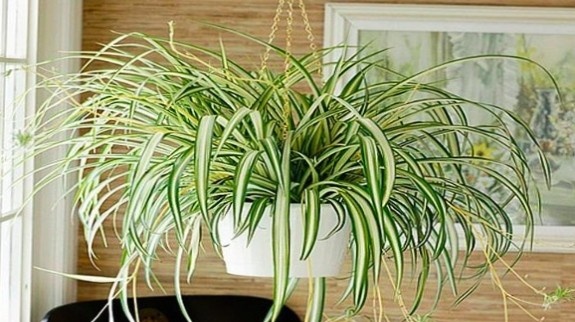
The spider plant, your green buddy, is a low-maintenance, high-style houseplant. Spider plants produce tiny white flowers during the summer.
Plant Type
- Herbaceous
- Perennial
Exposure
- Spider plants prefer a bright position indoors, with indirect or dappled light.
- It can also tolerate low light levels.
Habit
- A clump-forming, arching perennial with long, typically green leaves with white or yellow stripes.
- Produces arching stems that carry small white flowers and baby plantlets.
Zones
- Growing zones are 9-11
Height and Spread
- It grows up to 2 to 3 feet long and spreads 2 to 2.5 feet wide
Why We Love It
- It is beginner-friendly as it is easy to grow.
- Easy to propagate.
- It can tolerate neglect.
Season
- The Spider Plant is a tropical perennial, as it can grow all year round indoors.
- It grows well in summer and spring, but growth slows down in winter.
Summary
Foliage plants are just as valuable as flowers in creating a vibrant garden. Offering year-round color, texture, interest, and patterns. Different varieties come with different colors like purple, red, silver, yellow, and even combinations of colors.
Different foliage plants with varying roles in the garden. They grow well in warm climates and well-drained soil. These plants are loved for their beauty, colors, and low maintenance. They make the garden or homes bright year-round.
FAQs
Which is a foliage plant?
Foliage plants are ornamental plants that are loved, valued, and grown for their beautiful leaves rather than their flowers. Varieties of indoor plants like ferns, snake plants, peace lilies, and pothos.
What defines a foliage plant?
Foliage plants are appreciated for their decorative leaves with beautiful patterns. It refers to the collective leaves of a plant, encompassing their size, color, texture, and patterns.
How do you take care of foliage plants?
Taking care of foliage plants includes preferring bright, indirect light and partial shade. It requires well-drained soil but not waterlogged soil.
What is the difference between leaves and foliage?
Foliage and leaves are terms to describe the green parts of a plant. Foliage refers to the collective mass of leaves on a plant, while leaves specifically refer to the individual parts that make up the foliage.
