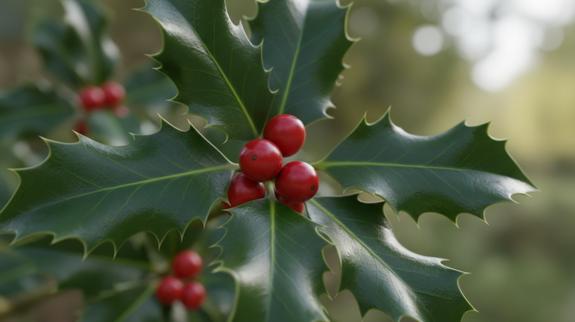
A friendly guide for homeowners looking to grow this classic species of holly, American Holly (Ilex opaca), for small gardens, including its growth rate, size, fruit, care tips, dwarf varieties, and whether it’s safe for pets and humans.
If you are looking for a four-season evergreen that brings structure, color, and wildlife value to a small garden, and one of the most reliable options you can plant. It is commonly name as American holly and also known as White holly, Christmas holly.
This iconic species of holly has the classic deep-evergreen broad-leaf and bright red fruit that gardeners associate with winter landscapes. Although in the wild it can grow into a tall, typically 40–60 ft forest understory tree, modern cultivars.
Especially, dwarf American holly selections make it incredibly suitable for urban yards, tight spaces, foundation beds, and privacy screening in small landscapes.
It has been cherished for centuries for its evergreen beauty and festive appearance. But beyond holiday décor, this plant serves as a hardy landscaping staple, thriving in a wide range of 1–2 ft. Its wide selection of varieties makes it surprisingly beginner-friendly, even if you don’t have much room to work with.
American Holly Growth Rate and Size
One of the biggest concerns homeowners have is whether it becomes too large. In the wild, the tree can reach 40–60 feet tall, but in home landscapes it generally remains smaller, especially with light pruning or when choosing compact varieties. Tree growth rate is naturally slow, which is great news for small garden owners who don’t want to battle an aggressive, fast-spreading tree. And usually reaches full maturity at around 100–150 years of age.
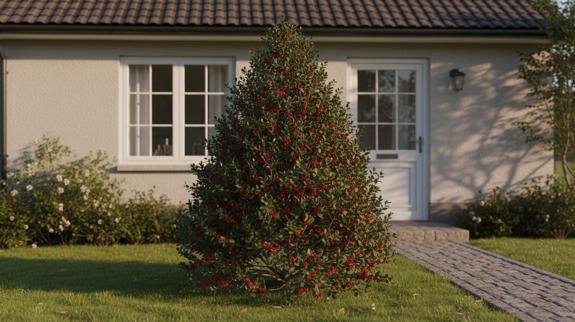
Most landscape specimens grow 6–12 inches per year, keeping them manageable. Standard cultivated trees commonly mature around 15–30 feet tall and 10–20 feet wide, but dwarf varieties stay much smaller, making them the perfect fit for small yards, patios, entryways, and foundation gardens.
This tree species is highly valued for its tidy pyramidal shape, attractive evergreen foliage, and wildlife benefits. Birds like robins, cedar waxwings, mockingbirds, and bluebirds rely on the berries during winter, especially when other food sources run low.
Best Dwarf American Holly Varieties
While the species plant can get fairly large over time, breeders have developed numerous compact and dwarf varieties. These grow slowly, maintain a dense shape, and offer year-round interest without overwhelming a limited space.
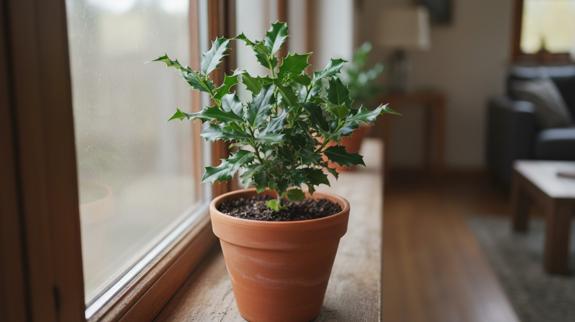
To make things easy, here are a few excellent options and the Best varieties for Small Gardens that work beautifully in limited spaces:
- Maryland Dwarf: The smallest option; grows low and wide.
- Miss Courtney: Compact size with heavy berry production.
- Judy Evans: Upright but not overly tall, good for tight vertical spaces.
- Satyr Hill: Dense, beautiful form when you want a standout specimen.
- Jersey Princess (female) + Jersey Knight (male): A great pollination pair for berry lovers.
- Clarendon Spreading: A low, wide female cultivar with a graceful shape perfect for ornamental planting.
- Cardinal Hedge: Hybrid, but often used in small spaces. Dense, compact, and highly manageable.
These cultivars give you flexibility depending on whether you want a shrub, a small tree, or a spreading groundcover.
If you prefer a more traditional tree form but still want something small, cultivars like ‘Miss Helen’ and ‘Greenleaf’ offer moderate height with narrow, manageable habits.
Growing Conditions: Keep Plant Healthy in Tight Spaces
American holly is surprisingly versatile when placed correctly. For best results in a small garden, site planning is key.
This plant grows best in moist, well-drained, slightly acidic soils, although it tolerates clay, sand, loam, and even occasionally dry or wet areas. Avoid planting in spots where water sits after rain, as the roots dislike flooding or heavy saturation.
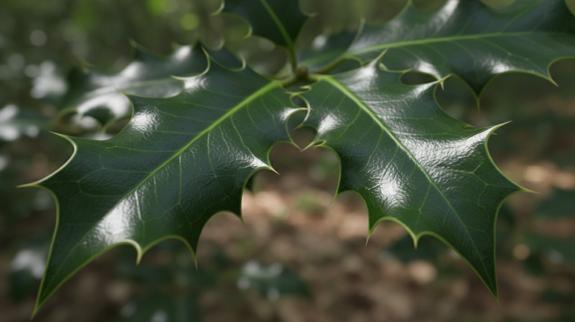
Light conditions should ideally be full sun to partial shade, even in compact gardens. In deep shade, the foliage becomes thin, and the plant loses its dense, bushy look. Afternoon shade can be helpful in especially hot climates.
Because it is an evergreen, winter wind can burn the leaves, so small gardens with fences, buildings, or shrubs nearby often provide natural shelter.
Fruit Bright Red Berries
If you are planting for color, the berries are the showstoppers. They begin to ripen from September onward and can stay on the branches well into winter, unless the birds get to them first.
To get berries, you must have:
- A female American Holly
- A male American Holly nearby
Only female trees produce fruit, but they need a male tree of the same species for pollination. This is an important detail many gardeners miss.
The berries are attractive and festive, but remember, they are mildly toxic to humans and pets. Birds, however, love them. Robins, cedar waxwings, bluebirds, turkeys, quail, and many others feed on the fruit, often stripping an entire tree in a single afternoon.
How to Grow American Holly
Let’s walk through the key needs of this plant in a way that makes sense for compact spaces.
Light Requirements
Grows best in full sun to partial shade. If your garden gets hot afternoon sun like in southern climates, some shade will actually help keep the leaves healthy. Too much shade, however, leads to thinner foliage.
Soil Conditions
This tree prefers well-drained acidic soil. It does not like alkaline or limestone soils, which can cause yellowing leaves, and it definitely dislikes flooding. Moist, rich, but well-drained soil gives the best results.
Wind Protection
Young American Hollies appreciate shelter from strong winter winds, especially in northern zones. Planting them near a fence or building works well.
Watering
Moderately moist soil is ideal, especially during establishment. After the first year, American Holly becomes fairly drought-tolerant.
Pruning
Pruning is easy and rarely needed. If you want a cleaner trunk or a more open form, prune lightly in late winter or early spring. Dwarf varieties need almost no pruning at all.
How to Use in a Small Garden
Even in limited spaces, this tree is incredibly versatile. Here are some design ideas that work beautifully.
- You can plant it as a small focal tree, especially if you choose a compact cultivar. The sculptural evergreen shape gives your garden structure throughout the year.
- If privacy is your goal, select a narrow cultivar and create a living screen along a fence or property line.
- For a classic, traditional landscape, it pairs wonderfully with boxwood, dogwood, azalea, and other woodland plants.
- Dwarf varieties can be used along foundations, in front-yard beds, or even as low hedging around paths. And if you are building a wildlife garden, tucking one or two American Hollies into a corner instantly adds shelter and winter food for birds.
Common Problems and How to Avoid Them
Generally easy to grow, but a few problems with American holly can appear:
- Leaves may yellow if your soil is alkaline.
- Spider mites or scale insects occasionally appear during hot, dry seasons.
- Poor drainage can lead to root issues, so avoid planting in heavy clay unless amended.
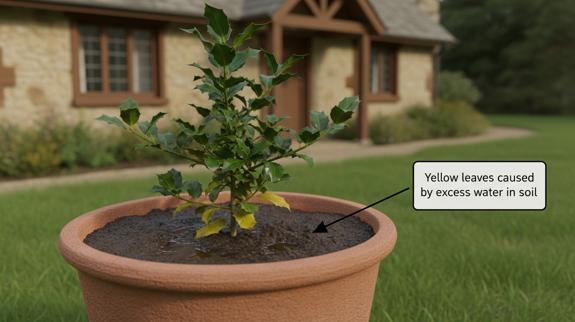
But the good news is that once established, this tree is long-lived and stays healthy with minimal care.
Summary
Absolutely, as long as you choose the right cultivar and placement. It brings year-round beauty, winter color, and evergreen structure that most small gardens desperately need. With its slow growth rate, compact forms, and outstanding wildlife benefits, it’s one of the most rewarding native evergreens you can plant.
If you’re ready to add something timeless, tough, and beautiful to your small landscape, the American Holly is an excellent choice.
Whether you are designing a cozy backyard, a small urban plot, or a wildlife-friendly space, Ilex opaca can easily become the shining centerpiece of your garden.
FAQs
Is American holly fast-growing?
No, it has a slow growth rate, usually adding about 6–12 inches per year. The slow growth makes it easy to manage in small gardens.
What is the American holly used for?
It’s commonly used as an ornamental evergreen, privacy screen, hedge, or specimen tree. Its berries and foliage are also popular for holiday decorations.
Is American holly a good tree?
Yes, it’s an excellent tree for year-round interest, wildlife value, and evergreen structure, especially when the right cultivar is chosen for your garden size.
Is American holly poisonous to humans?
The berries are mildly toxic and can cause nausea or vomiting if eaten. They should not be consumed, especially by children or pets.
