
How to care for Basil. Tips on caring for basil plants at home in a garden and keeping the leaves of the basil plant in good condition.
Growing basil is easy, it says in every garden book. And it’s true: compared to other herbs, it’s easy. However, growing it in a garden, or even better, a balcony garden, or just a windowsill, is an altogether different experience.
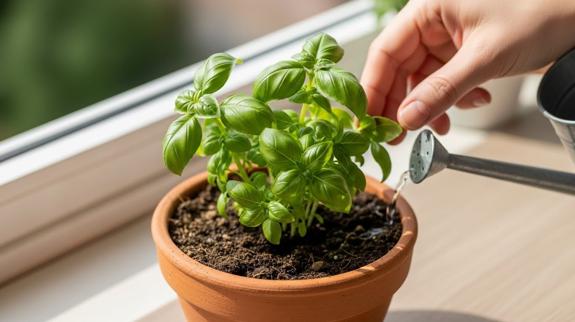
I learned quickly that basil plant care is less about planting and more about daily attention. This fragrant basil leaf herb reacts fast to mistakes, whether that’s poor light, inconsistent watering, or overcrowded roots.
I learned how to take care of a basil plant the hard way—by eliminating the plants that didn’t make it. I think I can honestly say that I didn’t treat basil plants very well until I began to treat them as an ordinary, live plant that needs attention, rather than as an unthinking houseplant I display. The purpose of this guide is to provide tips on how to grow basil, nothing more.
How to Care for a Basil Plant
In essence, taking care of a basil plant is all about finding a balance. For instance, basil plants love warmth, sunlight, and moisture, but they can’t tolerate extremes. Finding such a balance becomes even more important in a small garden.
Proper basil plant care starts with understanding. Lighting is the top consideration. A minimum of six hours of intense light is required for basil on a daily basis. In smaller growing areas, sunlight in the morning is the best option as it contains energy with less heat. If adequate light is not provided, the leaves of basil turn sparse with elongated stems.
Watering is the second major aspect. Basil requires constantly moist soil, but wet roots will cause trouble right away. I always make sure that the top inch of the soil has dried out slightly before watering again. This alone has prevented most problems with my basil plant.
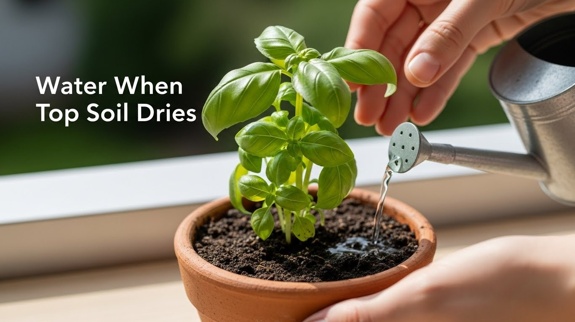
Watering connects well with drainage. Watering cannot occur in any container with basil if it is not well-drained. Waterlogged basil development kills roots and turns yellow. I do not compromise on drainage holes, regardless of the aesthetic pot.
Basil prefers full sun. It also needs thick soil. However, temperature variability is even more important than many people think. Basil dislikes cold nights, cold drafts, and temperature fluctuations. In small gardens, walls and concrete can hold the sun’s heat during the day. However, they also radiate cold at night.
After these basics are addressed, it is easy and even predictable to maintain the herb basil leaf.
How Do You Care for Basil Plants in a Small Garden
People often ask, How do you care for basil plants when space is limited. The answer is simple but specific. Basil plant care in small gardens is a bit more particular than basil cultivation in open ground. This is because containers dry out relatively fast, and the heat builds up a bit faster while the air circulation is considerably reduced.
The first thing I do is adjust the container size. Smaller pots dry out too fast, and root growth is limited. I use much larger containers than most people expect. The more soil, the more stable the moisture and the healthier the roots.
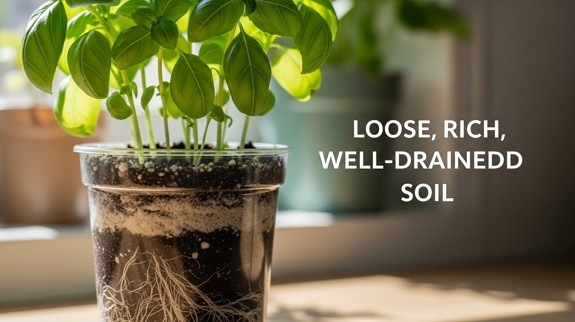
Another more common problem is crowding. Most store-bought basil plants have several seedlings in one pot, crowded together. If left to their own devices, they compete for light and nutrients and bolt prematurely. I always separate them or repot so that each plant has space.
Heat stress is more common in small spaces. When basil wilts during the afternoon, even though your soil is moist, that’s not thirst, it’s stress. Light shade added during peak heat helps far more than extra watering.
Airflow is important, too. Wherever basil is pushed against a wall or a railing, it creates a moister microclimate, and mildew grows there. I make sure to provide enough space around the basil for good airflow.
To take care of a basil plant in a small garden means that one has to adjust plant care procedures rather than traditional ones that are appropriate for gardens that are not confined.
How to Care for Basil
Regular maintenance on a daily and weekly basis will ensure that basil plants are productive. If not, even healthy plants will not remain in good health.
Pruning plays a major role when caring for basil plants in tight spaces. I perform regular pinching of the basil, starting from an early stage. When the plant develops multiple leaf nodes, I perform pinching above the leaf node to induce branching. This helps in maintaining the plant compact and yielding, mainly required in compact spaces.
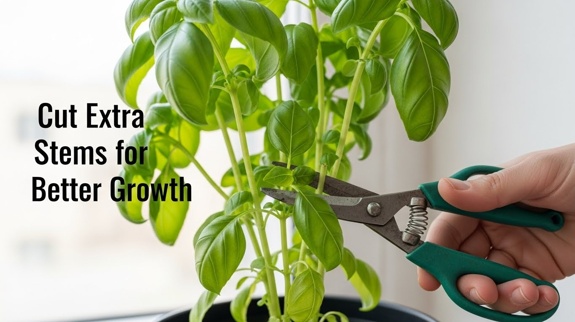
An important aspect of taking care of the basil plant is preventing it from flowering. Flowering of the plant indicates that the process of leaf production has ended. Regular checks are done on the plant. The flower buds are removed immediately once they are noticed. This process helps to ensure that the plant produces only basil leaves and not seeds.
Feeding is minimal. Basil requires less fertilizer. In excess, it promotes fast growth with poor taste. I resort to a diluted liquid fertilizer for pot-grown ones, sparingly, of course, maybe every few weeks at most.
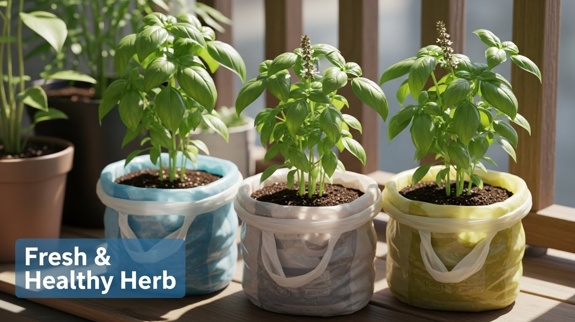
Observations receive little attention. “Healthy leaves of basil are bright green, taut, and aromatic.” They can easily be noticed by observing variations in leaf color, texture, or position.
To take proper care of basil, one must respond to the plant, rather than try to control it.
How to Care for a Basil Plant Indoors
Indoor basil, especially in small homes or apartments, needs more attention.
Light becomes the biggest challenge. A bright windowsill is necessary, preferably facing south or west. If basil shows definite one-sided leaning towards the window or an excessively tall growth with few leaves, it needs more light. Grow lights make a huge difference, especially in the winter months.
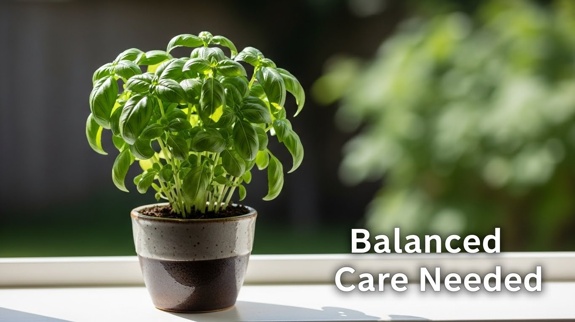
Indoor watering requires restraint. Pots dry more slowly indoors, so I water less frequently, while still watering deeply. One of the fastest ways to lose basil is by overwatering indoors.
Temperature and air flow are important indoors, as well. Basil does not like cold drafts, air conditioners, or heating vents. Stable temperatures will keep it healthy.
Humidity helps, but does not have to be extreme. I avoid constant misting and focus on consistent conditions and good airflow.
The trade-off for keeping basil alive indoors for a longer period is accepting a slower growth rate. Indoors, the aim is to achieve consistent healthiness, not explosive production.
Common Basil Care Problems and How I Fix Them
Generally, yellow-colored leaves would be an indication of too much watering or drainage issues. Allow some drying before checking drainage issues, however.
If the plant is wilting despite the moist soil, it can often be a sign that the plant has heat stress. Transplant the plant to avoid afternoon sunlight.
Tall and leggy growth appears when there is little light and when plants are not pruned. More light and pinching out will cure this.
Indoor pests, such as aphids, will appear if the air flow is not sufficient. I lightly rinse off leaves and provide better air flow.
Mold and mildew appear in dense and moist environments. Watering in the morning can help to minimize their growth.
Final Thoughts
When it comes to basil, it’s not so much a case of doing things right; it’s just a matter of doing them consistently. In small gardens, errors are magnified, but they’re also easier to spot, and once all those factors are in proportion, basil will just grow freely.
What I’ve found about basil is that it requires care, not neglect or tight management. By paying attention to the plant and responding to what it tells me, even a home garden yields healthy basil.
A caring basil plant focuses on balance rather than perfection. Basil needs consistent light, evenly moist soil, and good drainage to support healthy basil leaves.
If you focus on quality, instead of cutting corners, Basil will take care of the rest.
FAQs
How do you maintain a basil plant?
To maintain the basil, I provide it with continuous lighting, water it once the soil tends to dry, trim it frequently, and do not expose it to extreme temperatures.
Does basil need a lot of sun?
Yes. Basil requires at least six hours of bright light every day. Inadequate lighting results in weak plant growth and a lack of leaves.
How to keep potted basil alive?
Use a container that drains well, don’t overcrowd, water correctly, and offer consistent lighting. Big containers will give better survivor rates.
How to pick basil so it keeps growing?
I harvest above a leaf node and pinch quite frequently. Pinching plants frequently will make them bushy, as opposed to making them dormant.
