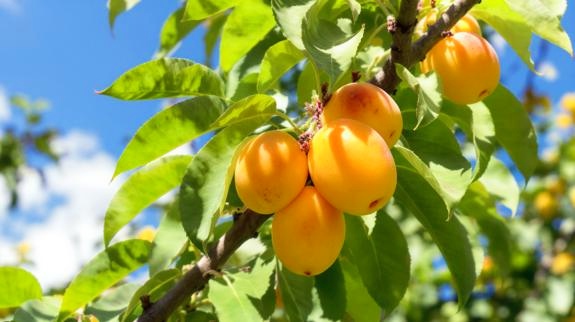
If you’ve ever dreamed of picking juicy, golden fruit straight from your own backyard, apricot trees might be your perfect small-garden companion. I’ve found that they aren’t just beautiful, they’re incredibly rewarding to grow, even when space is limited. With the right variety and care, you can enjoy home-grown, bursting with sweetness, right outside your door.
Apricot trees originated in the sunny, mountainous regions of Central Asia and China and spread through Persia and Armenia to Europe. Their roots in warm, dry climates explain why they grow best in sunny, sheltered spots with well-drained soil.
For small gardens, recreating these conditions, such as planting near a warm wall or in a large pot, helps apricots thrive and stay healthy. Modern dwarf and semi-dwarf varieties make them ideal for small gardens, patios, or even large containers.
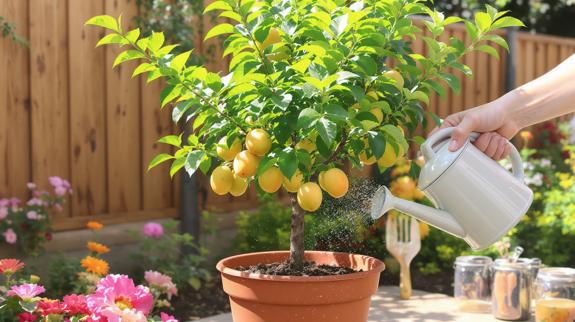
These fruit trees are small, graceful fruit trees. They’re worth growing not only for their delicious flavor, but also for their ornamental charm and ability to thrive in modest spaces.
Varieties of Apricot Trees
If you have ever thought your garden is too small for fruit trees, it’s not. With the right variety, a bit of sunshine, and some gentle pruning, you can enjoy golden fruit straight from your own small garden.
When it comes to growing apricots, I’ve learned that the secret to success isn’t just about soil or sunlight; it’s about choosing the right variety for your space. Over time, I discovered that not all trees grow the same way; some can easily fill a big orchard, while others are perfect for a cozy backyard or even a sunny patio.
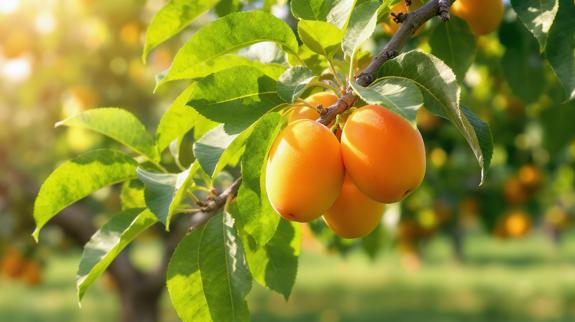
Now, if your garden is on the smaller side like mine, don’t worry, you can still enjoy home-grown apricots. Compact types such as ‘Pixzee’ or ‘Aprigold’ are bred specifically for containers. They typically reach around 1.5–2 meters in height but still produce full-sized fruit.
I’ve grown a dwarf apricot in a large terracotta pot near a sunny wall, and with careful pruning, it stayed healthy and manageable. You can even train the tree as a fan against a wall or fence; this not only saves space but also helps protect the blossoms from frost and increases warmth for ripening.
Plant an Apricot Tree
Growing an apricot tree in a small space is surprisingly rewarding. I chose a compact variety and tucked it into a sunny, sheltered corner of my yard. It now gives me fresh flowers each summer without taking up the space.
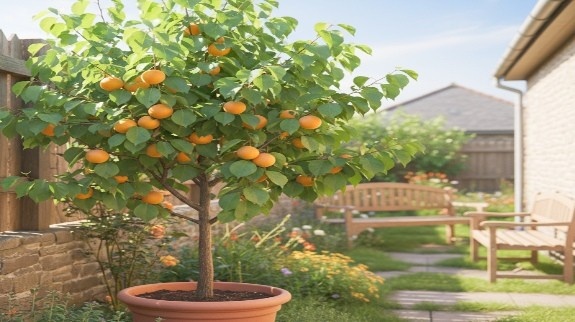
With the right variety, ideally dwarf or semi-dwarf, and a little care, you can enjoy the fruit of your labor even if your garden is modest in size.
How to Plant
I started with a young tree instead of a seed, which establishes far more reliably. Plant an apricot tree during late winter or very early spring. So it has time to settle before the growing season.
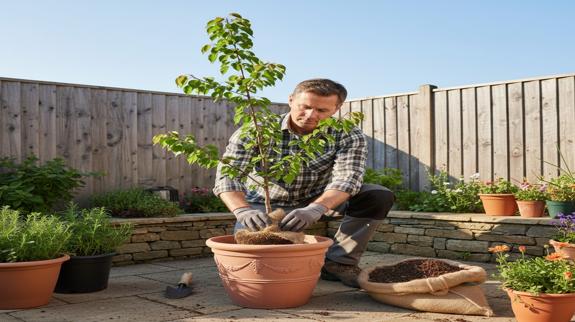
Before planting, I gave the bare roots a good soak and dug a wide, deep hole in well-prepared soil, it makes all the difference early on.
Once planted, I watered well to settle the tree and mulched around the base to conserve moisture and suppress weeds.
When and where to Plant Apricot
The ideal time to plant an apricot is in the autumn, but early spring works fine, especially for container-grown trees.
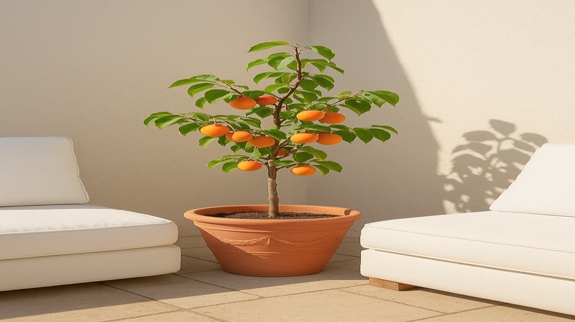
In my garden, I chose a spot near a south-facing wall, which gives extra warmth and shelter. Plant your fruit tree where your spot gets full sun and is ideally sheltered, especially in cooler or windy locations. If you’re in a small garden, planting against a warm wall or in a large container works well.
Soil Preparation
For the soil, I improved the planting hole by mixing in garden compost or well-rotted manure to give the tree a strong start. Apricots like a loamy, fertile soil that drains well and has a pH around 6.5–8. Also, make sure the soil drains well because apricots don’t like wet feet. Avoid frost pockets and ensure good air circulation.

Step-by-Step Planting Apricot Tree Guide
- Choose a dwarf or compact apricot variety suited for small spaces.
- Pick a sunny, sheltered spot, ideally near a wall or in a large container if space is very limited.
- Dig a hole twice as wide as the root ball, loosen the roots, mix in compost, and ensure good drainage.
- Place the tree so the graft-union sits just above soil level; backfill and firm gently. Water deeply to settle.
- Mulch around the base and stake if needed, especially in windy spots, to keep it stable the first year.
- For container planting, use a large pot, heavy material to avoid tipping, use a good quality potting mix, keep watering and feeding since containers dry out faster.
- As the tree grows, keep training or pruning it, so it remains productive and manageable in your space.
Apricot Tree from Seed
I turned my modest garden into a mini fruit oasis with a manageable apricot tree grown from seed, in a compact space.
Starting from seed takes patience; you won’t get fruit in the first year, and the variety may differ from the parent fruit. But it also gives you the satisfaction of growing something from scratch, it’s cheaper, and you might end up with a tree uniquely suited to your corner of the garden.
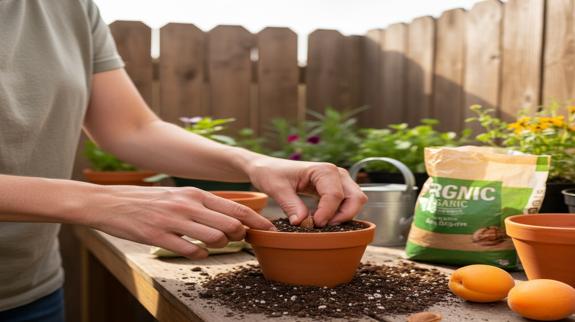
For my small space, I chose seedlings because I wanted the project and to experiment with pruning and training from the start. Guides like the Survival Gardener note that seed-grown stone fruits can surprise you with vigor, even if fruit comes a bit later.
I began with a pit from a ripe apricot and used a simple cold-stratification method so the seed would germinate. It’s slower than buying a sapling, but something is rewarding about nurturing your own tree from the very beginning. The key ideas are consistent: take your time, give the seed the right conditions, and you’ll grow a lovely little tree.
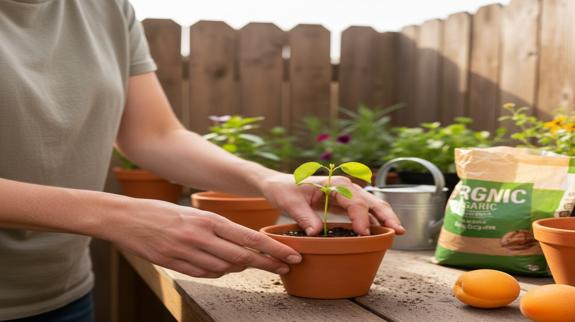
Here’s the 8-step process I used to plant an apricot Tree from Seed
- Extract the seed, clean the pit from a ripe apricot, and gently crack it to free the kernel.
- Soak the kernel overnight. This helps jump-start the process.
- Cold-stratify, wrap the seed in a damp paper towel or place it in a moist substrate, bag it, refrigerate for 4-6 weeks or longer, depending on the climate.
- Prepare a pot of 4-inch or slightly larger if you have space pot filled with a good, well-draining potting mix.
- Place the sprouted seed with its root end down, and cover lightly with soil.
- Keep it in a sunny spot or indoors until the seedling is strong.
- If you started indoors, gradually acclimate the young tree to outdoor conditions.
- For my garden, I used a large container placed against a sunny, sheltered wall, or optionally, plant in the ground if you have room. Encourage drainage, use good soil, and choose a compact variety or train it to stay small.
Apricot Care and Maintenance
Apricots aren’t high-maintenance, but a little attention goes a long way. Follow these easy care tips to keep yours thriving year after year.
- Soak the soil deeply when the top few cm feel dry. Pots dry faster; check often in hot weather.
- Add 5–10 cm of compost or wood chips around the base. It keeps moisture in and weeds out.
- Feed in late winter or early spring with a balanced fruit feed; add a little extra potassium as flowers and fruit form.
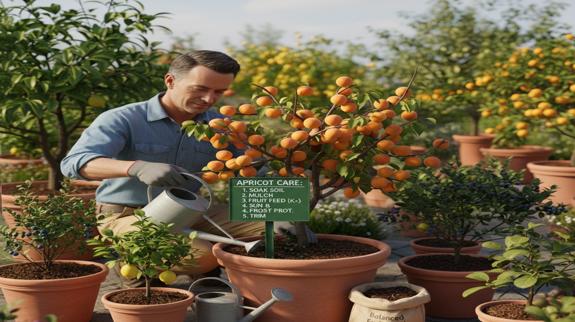
- Apricots love warmth and 6 to 8 hours of sun. Protect spring flowers from late frost with fleece.
- One dwarf tree fits well in a pot or tight corner; just keep branches trained flat or trimmed.
Apricot Tree Blossom and Pollination
When my apricot tree first started to blossom, it was truly magical, with delicate pink-white flowers covering the branches. Apricots usually bloom in early spring, just as the weather starts to warm up. But because the blossoms appear early, they’re sensitive to frost, so I always protect mine with a light garden fleece or move the container near a sunny wall for extra warmth.
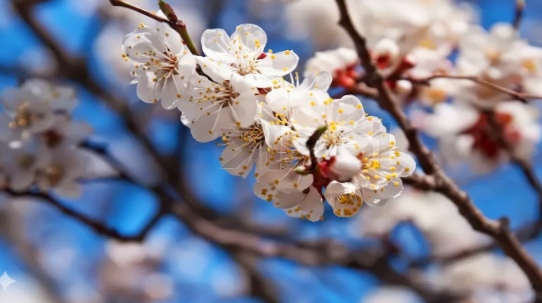
For good fruit set, pollination is key. Most compact apricot varieties are self-fertile, but I have found that planting another apricot nearby or encouraging bees with spring flowers really boosts yields. Gently shaking the branches can also help transfer pollen if insects are scarce.
Pruning Apricot Trees
Pruning helps the tree focus its energy on younger wood that will bear fruit, rather than just growing tall and leggy, and keeps my apricot tree healthy and productive. Prune so you can easily manage the size, harvest easily, and enjoy a good harvest every year.
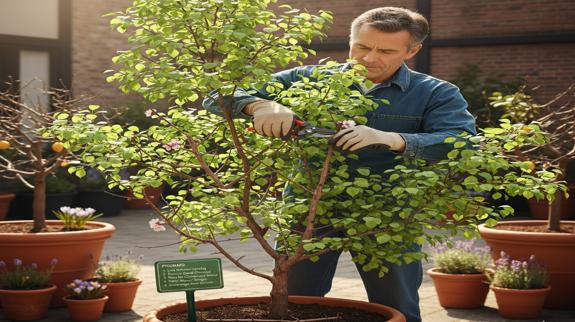
I prune my tree in late winter to early spring, just as buds begin to swell and before full leaf-out. On my dwarf variety, I prune annually by removing the three “D’s”: dead, diseased, damaged, and then thin to maintain height and spread and ensure new wood is encouraged because that’s where next season’s apricots will form.
Summary
When I first planted my compact apricot tree, I focused on three simple things: pick a dwarf variety, place it in a sunny, sheltered spot, mine is against a south-facing wall in a large container.
Proper care, good and well-drained soil, regular water when young, and annual pruning to manage size and encourage fruiting. I trained the branches as a fan, kept the interior open so sunlight reaches everything, and harvested juicy apricots each summer.
If you’re thinking of planting your own, why not start this season? Whether you begin with a seed or a young sapling, you’ll be investing in your own mini fruit oasis.
It doesn’t have to wait; pick the right variety, prepare your spot now, and you’ll be ready to watch your tree grow, bloom, and eventually give you fresh apricots. I’m doing it, and you can too. Let’s get your small garden thriving.
FAQs
How long do apricot trees take to fruit?
Typically, 3 to 4 years from a young sapling or seed grown can take 4 to 6 years. Good sun, pruning, and watering can bring earlier, heavier crops.
How to identify an apricot tree?
Look for smooth grayish bark, oval serrated leaves with long petioles, early spring white-to-pale-pink blossoms, and round orange fruit with a single large, ridged pit.
How tall do apricot trees grow?
These trees usually grow about 12 to 15 feet tall, though some varieties can reach up to 25 feet if not pruned regularly.
Can you grow an apricot tree in the UK?
Yes, you can; apricot trees grow well in the UK if planted in a sunny, sheltered spot, preferably against a south-facing wall, and protected from frost during flowering in early spring.
