
Learn how to grow Purple Sweet Potato in a small garden using simple container methods, compact varieties, slip creation, soil mixes, vertical growing, and easy harvesting techniques. Perfect for beginners wanting to grow an Okinawan Sweet Potato or any sweet potato plant in a tiny space.
Purple sweet potato growing involves cultivating a unique, nutritious variety of sweet potato known for its vibrant purple flesh and skin. This food has gained worldwide popularity for its appealing color, sweet taste, and numerous health benefits.
Growing these Sweet potatoes in a small garden might sound like a big challenge, but trust me, it’s completely doable. I have grown these beauties in cramped patios, narrow side yards, tiny raised beds, and even in containers that barely had room to breathe.
Purple sweet potato farming offers a unique and rewarding agricultural opportunity. Beyond its captivating appearance, this crop is fully rich in vitamins and fiber, making it a valuable addition to your healthy diet. Embracing this versatile and nutritious crop not only contributes to food diversity but also promotes sustainable agriculture practices.
So, whether you are a farmer looking to diversify your crops or simply a food enthusiast, consider including purple sweet potatoes in your agricultural endeavors.
Quick-Start Guide
If you are eager to jump right in, here’s the fast version. This is the exact process I use when I want results without thinking too hard about it.
• Start slips indoors from a single Purple Sweet Potato
• Choose a 10 to 20-gallon container
• Fill it with fluffy, well-draining soil
• Plant the slips once temperatures rise above 65°F
• Water consistently and train the vines upward
• Harvest right before frost once leaves turn yellow
That’s the bird’s-eye view. The rest of this guide fills in the important details so nothing goes wrong.
Best Purple Sweet Potato Varieties
Not all purple varieties behave the same. Some stay compact. Some have long vines that stretch like they’re training for a marathon. After years of trial and error, I have found a few that work incredibly well in small spaces.
Okinawan Sweet Potato
Cream-colored skin and deep lavender flesh. Mild, nutty flavor.
Great for containers but needs warmth.
Stokes Purple
Purple skin and deep violet flesh. Dense and flavorful.
Excellent for pots and small raised beds.
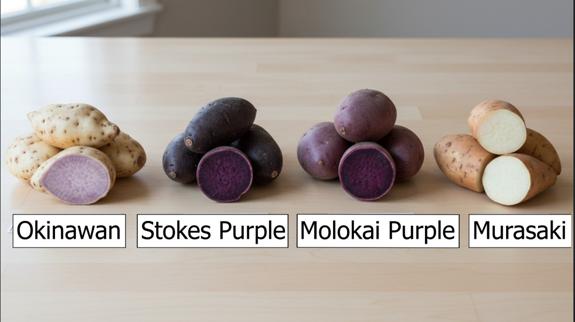
Molokai Purple
Hawaiian variety with rich purple flesh.
A little more vigorous, so give it a taller trellis.
Murasaki
Not purple inside, but great for tiny spaces thanks to compact growth.
A solid option if purple varieties are unavailable.
I like to choose varieties that stay relatively manageable and don’t overwhelm a small garden with endless vines.
How to Make Slips in a Small Home
You don’t need a greenhouse or spare room to make slips. I have grown dozens of slips in spaces smaller than a bathroom counter. Ensure proper spacing, typically 12 to 18 inches apart, and a depth of 2 to 3 inches.
Method One: Vertical Jar Sprouting
I take a single Sweet Potato, suspend it over a jar of water using toothpicks, and leave half the potato above water. Roots grow below, slips sprout above. Perfect for tiny kitchens.
Method Two: Soil Tray Method
If I need more slips, I bury the whole potato sideways in a shallow tray of moist potting mix. Slips pop up fast and stay compact.
Slip Separation
Once the slips reach about 8 inches, I gently twist them off and place each one in a small cup of water to grow roots. They root quickly, and you only need a small sunny window to keep them happy.
Troubleshooting Slip Growth
If the slips grow slowly, I move the jar to a warmer spot. If they droop, they almost always perk up with a little more light.
Container Growing
Growing Sweet Potatoes in containers is hands down my favorite approach for small gardens. You control the soil, the drainage, the warmth, and the pests.
Best Container Sizes
• 5 gallons: Will give you miniature potatoes
• 10 gallons: Solid harvest
• 20 gallons: Ideal size for big tubers
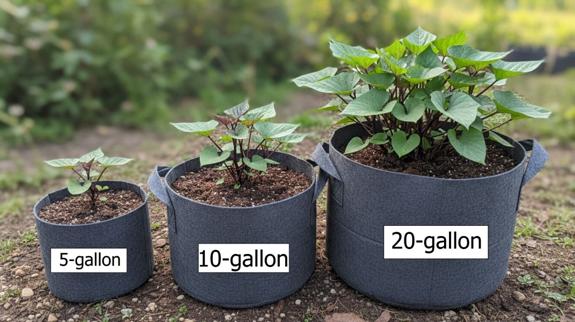
If you can only choose one, go with a 15 or 20-gallon fabric grow bag. It stays breathable and helps prevent root rot.
Soil Mix Formula
Purple sweet potato plants love fluffy soil. Dense or sticky soil makes tubers grow long and weird.
Here’s the mix I use:
• 40 percent compost
• 40 percent high-quality potting mix
• 20 percent coarse sand or perlite
I avoid high-nitrogen fertilizers because they make the vines explode with growth while the tubers stay tiny. Low nitrogen produces better potatoes.
Container Placement
Small gardens get tricky because space is limited. I always place containers:
• Against a south-facing wall
• On warm patios
• Near reflective surfaces to boost sunlight
• In the sunniest corner I can find
Purple sweet potatoes love heat. Warmth equals bigger potatoes.
Watering Containers
Containers dry faster than garden beds, so I check moisture often. I water whenever the top inch of soil is dry. The biggest mistake beginners make is soaking the soil too often. Wet soil suffocates the tubers.
Vertical Growing Techniques
Purple Sweet Potato vines can stretch as far as they want, so I guide them upward instead of letting them sprawl. Vertical growing saves space and keeps the vines healthier. I use:
• A-frame trellises
• Garden fencing
• Balcony railings
• Bamboo poles
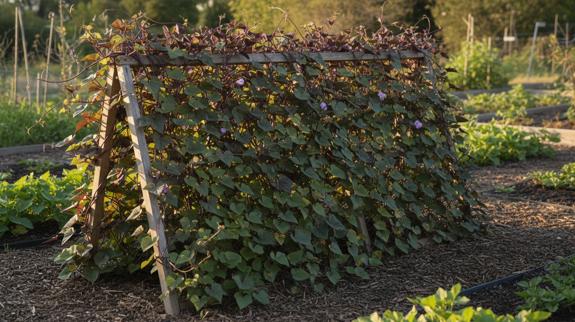
Once the vines grab hold of something, they climb easily. If the vines get too long, I prune them. Slight pruning encourages the plant to put more energy into tubers.
How to Plant in Small Beds
If you have a tiny raised bed or a small garden patch, plant slips 12 inches apart. The soil needs to be loose at least 10 inches deep. I avoid rich, nitrogen-heavy soil because it grows leaves instead of potatoes.
Mulch helps keep moisture stable and protects young slips from intense sunlight. In a small bed, Purple Sweet Potatoes can spread fast, so train vines upward or toward unused edges.
Care Guide
Purple Sweet Potatoes care in tight spaces is pretty simple once you understand what they like.
Climate: Sweet potatoes thrive in warm, tropical, or subtropical climates.
Soil: They require well-draining soil with good fertility. A pH level between 5.8 and 6.2 is ideal.
Fertilizing: I stick to low-nitrogen fertilizer or compost. A balanced fertilizer with slightly higher potassium works well for container plants. Nitrogen can ruin your harvest, so I keep it light.

Apply a balanced fertilizer with adequate potassium and phosphorus for root development. Organic matter-like compost can also improve soil fertility.
Weed Control: Regularly remove weeds to prevent your plants from competing for nutrients and space. Pest and Disease Management: Keep an eye out for pests like sweet potato weevils and diseases such as sweet potato scab. Use appropriate pesticides and preventive measures.
Watering Strategy: If you garden in a hot zone and your plants sit on a patio, the soil dries faster. I check moisture daily during heat waves. If you garden in partial shade, reduce watering a bit because the soil stays moist longer.
Sweet potatoes require consistent moisture during the growing season. Adequate watering is crucial, but be careful not to over-water, as this can lead to rot.
Pest Control in Small Gardens: Small outdoor spaces attract all kinds of hungry visitors.
• Squirrels dig into containers
• Cats nap in the warm soil
• Birds peck leaves
• Deer and rabbits love the vines
I protect plants with lightweight netting or small fences. For balconies, I raise containers off the ground so small animals can’t reach them.
Zone
| USDA Zone | Start Slips Indoors | Plant Outdoors | Use Protection? | Harvest Window |
| Zone 4 | Mid–March | Early–June | Yes (grow bags + black plastic + row cover) | Late Sept–Early Oct |
| Zone 5 | Early–March | Late–May to Early–June | Yes (row cover or low tunnel) | Late Sept |
| Zone 6 | Late–Feb to Early–March | Mid–May | Optional in Cool Springs | Late Sept–Early Oct |
| Zone 7 | Feb–March | Early–Mid May | No | Oct |
| Zone 8 | Jan–Feb | Late April | No | Late Sept–Oct |
| Zone 9 | Jan | Late March–April | No | Sept |
| Zone 10 | Year-round | Feb–April (avoid hottest months) | No | Anytime 110–130 days later |
Troubleshooting: Problems and Solutions
I have hit every possible problem over the years, so here’s what I have learned.
| Problems | Solutions |
| Slips not rooting | Move them somewhere warmer or give them more light. |
| Vines everywhere and tiny tubers | Too much nitrogen or too much shade. Fix the soil and make sure they get six hours of sun. |
| Small or skinny potatoes | The soil was too dense or the container too small. |
| Yellowing leaves | Often a watering issue. Adjust frequency. |
| Vines won’t climb. | Give them a structure and gently wind the vines upward until they latch on. |
| Compacted container soil | Add extra perlite next time and fluff the soil before planting. |
How to Harvest
Purple Sweet Potatoes are ready when the leaves begin to yellow. They are typically ready for harvest 3 to 4 months after planting. In containers, carefully dig them up, being gentle to avoid damaging the tubers.
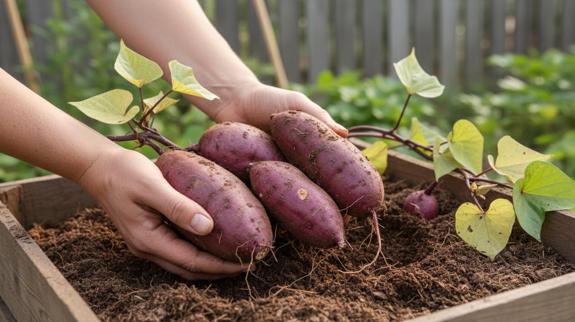
Harvest before frost. Frost damages potatoes instantly. Here’s what you can realistically expect:
• 10-gallon pot: 3 to 6 medium potatoes
• 15-gallon pot: 5 to 10 potatoes
• 20-gallon pot: a very generous harvest
• Small raised bed: a full season’s supply
Yield varies with sun, warmth, and soil fluffiness.
Summary
Growing Purple Sweet Potatoes in a small garden is easier than most people think. Plant slips or wine cuttings in rows or mounds. Make sure proper spacing, typically 12 to 18 inches apart, and a depth of 2 to 3 inches.
With a roomy container, fluffy soil, and plenty of sunshine, you can grow a healthy, colorful harvest that tastes incredible. Train the vines, water consistently, and keep nitrogen low. That’s really all there is to it.
I grow Purple Sweet Potatoes every year because they’re beautiful, productive, and practically designed for small gardeners like us. Enjoy the journey, and enjoy your harvest.
FAQs
How long does it take for purple sweet potatoes to grow?
Most Purple Sweet Potatoes take 100 to 120 days to mature. In warm climates, they grow faster. In cooler climates, expect closer to four months.
How do you grow purple sweet potatoes?
Start slips indoors, plant them in warm soil, give them full sun, and keep the vines trained upward. Containers or small beds both work wonderfully.
Are purple potatoes easy to grow?
Yes. They are surprisingly forgiving as long as they get heat, sunlight, and loose soil. They thrive in containers and small gardens.
Can I grow purple sweet potatoes indoors?
You can grow slips indoors, but a full harvest indoors is difficult. They need strong sunlight and warmth. A sunny balcony or patio works much better.
