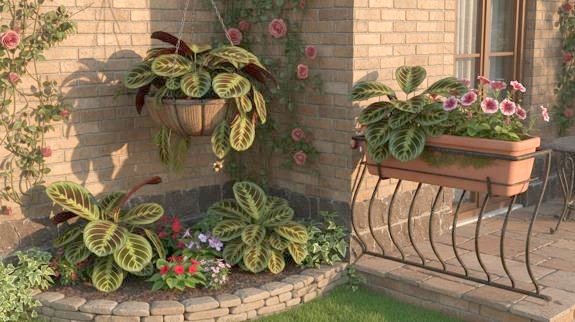
Looking to grow prayer plants outdoors in a small garden? Learn where they thrive best, how to care for them, the types you can grow, common problems, and tips for planting Maranta leuconeura successfully.
If you love vibrant foliage and plants with personality, these plants are one of the most rewarding choices you can bring into your small garden. Known scientifically as Maranta leuconeura, these plants are admired for their colorful, patterned leaves and their unique habit of folding up each night, almost as if they are praying.
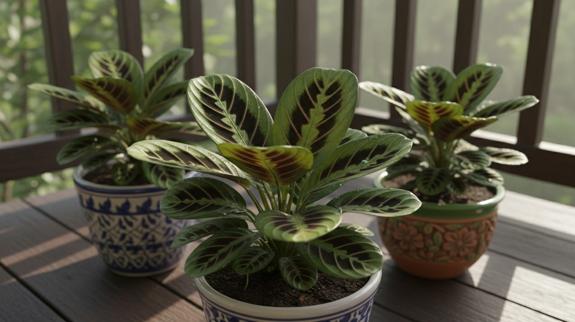
But here’s the big question many small-garden owners ask: Can prayer plants grow outside?
The short answer? Yes, but only under the right conditions.
This guide will walk you through exactly how to use prayer plants effectively in small gardens, patios, and balcony spaces. You’ll learn where to plant them, how to care for them, how to solve common issues, and which varieties perform best outdoors.
Can Prayer Plants Grow Outside?
Yes, these plants can grow outside, but only if your outdoor environment closely matches their native conditions: warm, humid, and shaded. They are tropical plants originally from Brazil, so they thrive best in small gardens that offer shelter from intense sunlight and cold temperatures.
Here’s the simplest rule:
- If your climate stays above 15°C at night during warm months, you can place them outside.
- If temperatures drop below this, bring them indoors.
This makes them perfect for balconies, patios, shaded garden beds, and sheltered courtyards during spring and summer.
Benefits of Having Prayer Plants in Small Gardens
Growing plants outdoors can bring a surprising amount of beauty and interest to compact garden spaces. Some benefits include:
- Adds tropical color instantly, their patterned green, lime, and red leaves brighten any shaded corner.
- Ideal for shade-loving small gardens, since small gardens often have limited sunlight, they fit in perfectly.
- Perfect for containers, small pots, hanging baskets, and railing planters suit them well.
- Movement adds charm as their nightly “prayer” motion brings your garden to life.
- Natural ground cover, they spread low and wide, making them great fillers.
Best Outdoor Conditions for Prayer Plants
For successful growing prayer plants outdoors, match the conditions they love indoors.
Light
They love:
- Bright, indirect light
- Filtered shade under trees
- Morning sun + afternoon shade
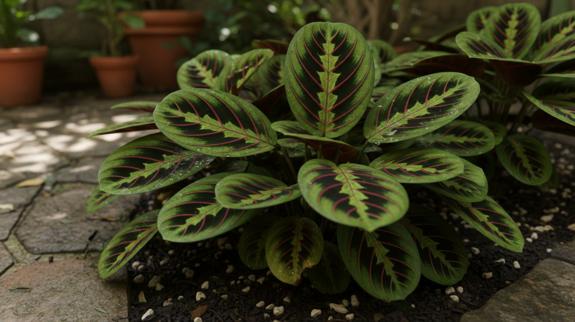
Avoid placing them in strong midday or afternoon sun; their leaves can scorch quickly.
Temperature
- Ideal outdoor range: 18–27°C.
- Never allow them to experience frost or cold drafts.
- Bring them indoors before nighttime temperatures fall below 15°C.
Humidity
Small gardens can sometimes be dry, especially balconies.
To boost humidity:
- Group plants together
- Place them near a water feature
- Mist lightly in the morning
- Keep them in sheltered corners
Soil
Prayer plants prefer:
- Moist, well-draining soil
- Slightly acidic conditions
- Soil rich in organic matter
If using containers, a peat-based mix is ideal.
Ideal Places to Plant Prayer Plants
You can use plants creatively in compact outdoor spaces. Great locations include:
- Shaded garden corners
- Under taller shrubs or small trees
- Along shaded pathways
- In hanging baskets on covered porches
- Patio container groupings
- Balcony railing planters
- Near water features or humid spots
Because they stay low, these plants work well as edging plants in small shaded borders, too.
Care for Prayer Plants
- Keep the soil consistently moist but never waterlogged. Let the top inch of soil dry slightly before watering again, especially when grown outdoors in containers where the soil dries faster.
- Use room-temperature or filtered water if possible because plants can be sensitive to minerals in tap water, which may cause brown leaf tips.
- Give them bright, indirect light or full shade; avoid harsh afternoon sun as it can bleach or scorch their delicate leaves. Morning sun for an hour or two is fine, but filtered light is best for maintaining vibrant colors.
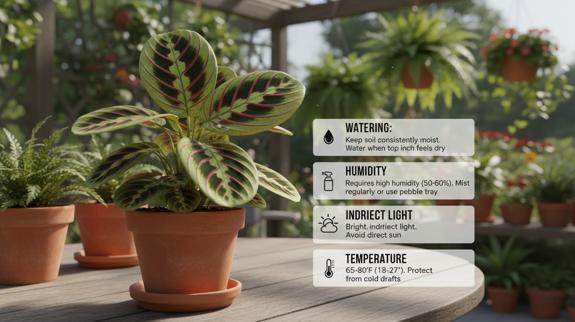
- Maintain warm temperatures between 18–27°C. Avoid placing them in areas with cold drafts, wind tunnels, or sudden temperature drops, especially in small outdoor spaces.
- Boost humidity by placing the plant where moisture naturally collects, grouping them with other plants, or lightly misting during dry weather. Containers in small gardens can dry out quickly, so humidity support helps keep leaves lush.
- Fertilize lightly every 2–3 weeks during spring and summer using a balanced liquid fertilizer diluted to half strength. Too much fertilizer can damage roots and dull leaf patterns.
- Keep outdoor potted plants in breathable, well-draining soil mixed with peat, compost, and perlite. This prevents soggy soil while keeping enough moisture for the plant’s roots.
- Rotate containers every week or two to ensure even growth and prevent your prayer plant from leaning toward the brightest side of your garden.
- Protect them from strong winds by placing them near walls, fences, or behind sturdier plants. Plants have soft leaves that can tear easily outdoors.
- Remove old, yellow, or damaged leaves regularly to encourage healthy new growth and keep the plant full and bushy.
- In very hot weather, water more frequently and move potted plants into denser shade to prevent stress or leaf curling.
- When temperatures start to fall below 15°C, transition plants indoors gradually by reducing sun exposure over a few days before moving them inside. This prevents shock and leaf drop.
Plant Prayer Plants Outdoors
Instead of quick bullet points, here’s a clearer, friendlier step-by-step explanation to help you confidently grow Plants in your small garden.
Choosing the Perfect Spot
Start by selecting a place that naturally receives soft, filtered light. Good outdoor locations include under the canopy of a larger plant, inside a shaded corner of your patio, or along the side of a fence where direct sun doesn’t hit for long. Since these plants dislike harsh sunlight, placing them in a fully shaded or partially shaded area helps them settle in comfortably.
Preparing the Soil
Prayer plants appreciate soil that is moist but drains easily. If planting directly into the garden, loosen the soil and mix in compost, peat moss, and a bit of perlite. This improves drainage while keeping enough moisture around the roots. For containers, a peat-based potting mix works perfectly and makes watering easier to control.
Planting the Root Ball
Gently slide your plant out of its pot and place it into a hole that’s just the depth of its root ball. Avoid burying the stem too deep. Pat the soil around it to secure it, but don’t pack it tightly; roots prefer room to breathe.
Watering After Planting
Give the newly planted prayer plant a generous drink of water, letting excess moisture drain out naturally. This helps settle the roots and removes air pockets. In hot weather, monitor soil moisture daily, especially for container-grown plants, as they dry out faster.
Helping It Adjust Outdoors
For the first week, keep your prayer plant in a shaded and protected spot while it adapts to outdoor conditions. After it adjusts, you can slowly introduce slightly brighter locations, but always avoid direct afternoon sun. This gentle transition prevents shock and keeps the leaves vibrant.
Types of Prayer Plants
Here are beautiful varieties of Maranta leuconeura that work wonderfully in small gardens:
Red Prayer Plant (Erythroneura)
Dark green leaves, red veins, and a bold appearance, great for shady patio corners.
Lemon Lime
Bright lime-colored veins give a cheerful glow to any shaded balcony.
Kerchoveana (Rabbit’s Foot)
Light gray-green leaves with green patches, one of the toughest outdoor performers.
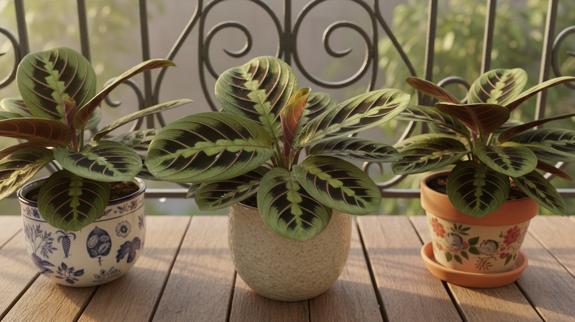
Black Maranta (Massangeana)
Deep green foliage with silvery markings, perfect for moist, sheltered spots. These varieties each add their own texture and flair to small garden spaces.
Prayer plant problems
Even in small gardens, prayer plants can face a few challenges. Here are the most common issues to keep an eye on, along with simple fixes that work well outdoors:
- Brown leaf tips usually appear when the air is too dry, the plant is getting too much sun, or the soil dries out too quickly. Increasing shade, adding humidity, and watering more consistently usually restores healthy new growth.
- Curling leaves are a clear sign that the plant is stressed, either from too much sunlight, not enough water, or hot, drying winds. Move your plant into deeper shade, give it a good drink, and shelter it from strong breezes.
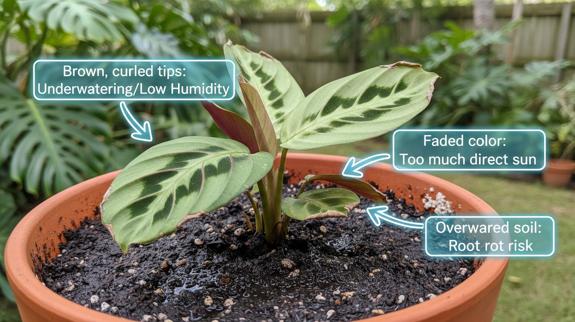
- Yellowing leaves often point to overwatering or poorly draining soil. If the soil stays soggy for too long, roots begin to weaken. Let the soil dry slightly before watering again, and improve drainage with perlite or by switching to a lighter potting mix.
- Faded or washed-out leaf colors happen when prayer plants receive too much bright, direct light. Their patterns lose vibrancy. Relocating them to a more shaded area quickly brings their color back.
- Wilting or drooping leaves outdoors usually indicate underwatering or heat stress. Water thoroughly, move to cooler shade, and check that your soil isn’t drying too fast in small pots.
- Brown patches or burned spots come from harsh sunlight. Small gardens often reflect heat from walls or pavements, so keep plants away from radiating surfaces during the afternoon.
- Slow or stunted growth often means the plant needs more humidity, warmth, or nutrients. Light feeding during the growing season and grouping plants for humidity can help them bounce back.
- Pests like spider mites or mealybugs can appear during hot, dry weather. Regularly check the underside of leaves and treat early with neem oil, gentle rinsing, or insecticidal soap.
These problems are usually easy to fix, and once you understand what your prayer plant is telling you, outdoor growing becomes much more enjoyable and low-maintenance.
Prayer plant propagation
Prayer plants are fun and easy to multiply, making them great for expanding your small garden.
Division
The simplest and fastest method. When repotting, gently separate natural clumps of the plant, ensuring each has its own roots. Replant each section into its own pot or garden spot.
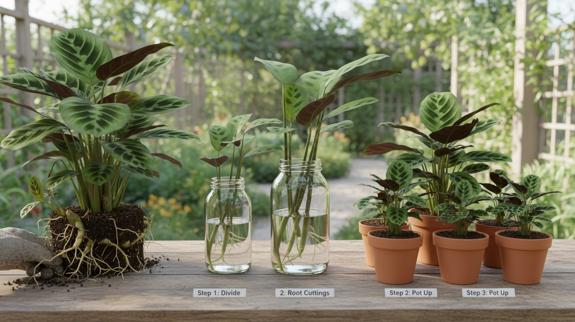
Stem Cuttings
Choose a healthy stem with a few leaves, place it in water, and wait 2–3 weeks for roots to appear. Once rooted, transfer it to soil. This method is perfect for creating matching plants for patio displays or balcony arrangements.
Conclusion
Prayer plants are an ideal choice for small gardens, patios, and shaded balconies. Their colorful leaves, compact size, and charming nightly movement make them a refreshing addition to limited outdoor spaces. With the right environment, shade, humidity, and consistent watering, plants can thrive outdoors just as beautifully as indoors.
Whether you’re planting them in garden beds, containers, or hanging baskets, they bring vibrant tropical character to even the tiniest garden. With a little care and creativity, your small outdoor space can become a lush, peaceful retreat filled with the unique beauty of Maranta leuconeura.
FAQs
Where is the best place to put a prayer plant?
Place your prayer plant in bright, indirect light or filtered shade. Outdoors, choose a spot with morning sun and afternoon shade to prevent leaf burn.
What is special about a prayer plant?
Prayer plants are known for their striking foliage and unique nightly leaf-folding movement. Their expressive behavior and bold patterns make them a standout companion in small gardens.
How to tell if a prayer plant is happy?
A happy prayer plant has vibrant colors, smooth leaf edges, and steady new growth. Its leaves open widely during the day and gently fold up at night.
Why do prayer plants fold up at night?
This natural movement, called nyctinasty, happens in response to changes in light. It helps the plant manage moisture and stay healthy.
