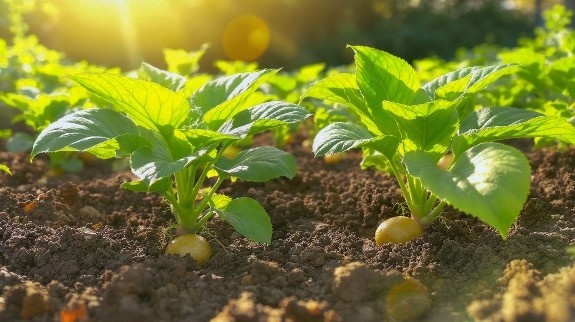
Ready to grow potato right in your backyard or balcony? Let’s turn a simple tuber into a basket full of golden goodness. Have you ever experienced in grown your own potatoes? If not, you might be surprised how easy it is. Potatoes are more not just a side dish; they’re a gardener’s delight.
Finding potatoes under the soil is like a treasure hunt each time you dig in and pull one out. It is wildly satisfying to pull potatoes out of the dirt.
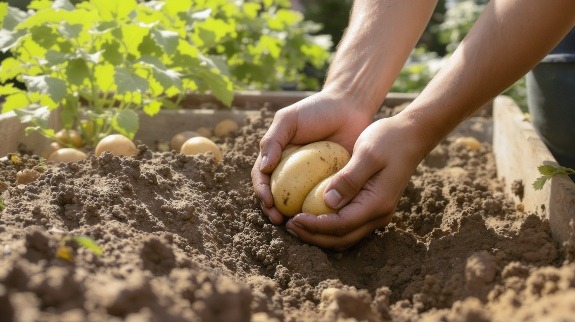
Grow potato in loose, airy soil, and keep in mind good drainage. Remove the potato’s skin and place it near a warm window; this will encourage growth. Each potato you plant turns into 5 to 6 new potatoes.
The potato is a cool-weather vegetable that produces high yields in the northern portion; however, it can also be grown as a winter crop in warmer climates.
You can grow potato right in the garden, raised beds, and containers with loose, airy potting soil that drains well.
Why Grow Your Own Potatoes
Store-bought potatoes are cheap. But once you taste one that came from your own soil, soft, flavorful, and fresh, you’ll never look back. You control what goes into your garden and what doesn’t, so you’re skipping pesticides and chemical residue.
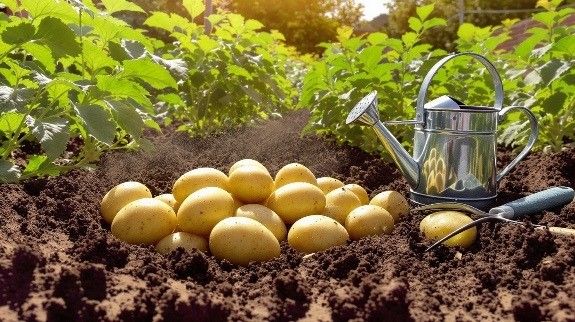
Plus, potatoes are surprisingly low-maintenance. If you’ve got sunshine, decent soil, and a watering can, you’re already halfway there.
Understanding Potatoes
What Are Potatoes?
Potatoes or Solanum tuberosum are underground stems called tubers, not roots. They belong to the same family as tomatoes and peppers, the nightshades. That means they thrive in similar conditions: sunshine, warmth, and loose soil.
How to Grow Potato
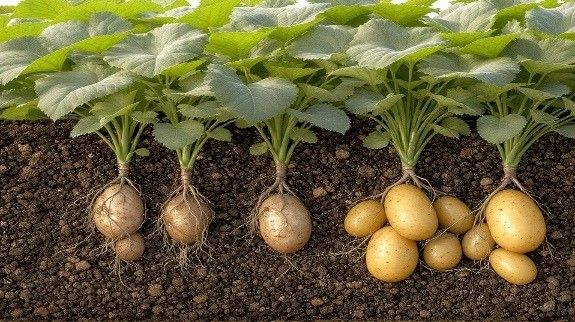
Each “seed potato” grows into a leafy plant above ground and a network of tubers below. More stems buried under soil are equal to more potatoes. It’s plant magic you can actually eat.
Varieties and Classifications to Grow Potato
- Early: Harvest in about 70 days. Great if you’re impatient like me.
- Mid-Season: Takes 80 to 100 days and tends to have higher yields.
- Late: Need around 120 days, but store beautifully through winter.
Waxy vs. Mealy Potato
Waxy potatoes like Red Norland stay firm when boiled, perfect for salads. Mealy potatoes like Russets turn fluffy when baked or mashed. I grow both because, well, variety makes dinner more exciting.
You can’t go wrong with Yukon Gold, Kennebec, or Red Norland. They’re reliable, tasty, and do great in small gardens or containers.
When and Where to Grow Potato
Grow potato before 2 to 4 weeks of your last frost date. The soil should be at least 45°F. In northern regions, that’s late March through May. In the South, you can plant as early as winter.
I love this tip from seasoned farmers: plant when the dandelions bloom or when snow has just melted from the hills. Nature’s signals rarely lie.
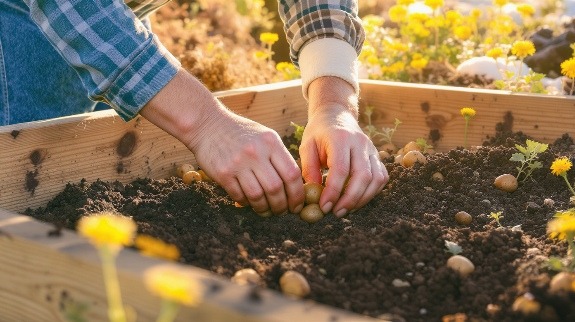
Potatoes love sunlight; 6 to 8 hours a day is ideal. Choose a spot with plenty of space and avoid planting near big tree roots. Those roots are sneaky; they’ll compete for nutrients.
Loose, airy, well-drained soil is key. Compacted clay will give you funky, misshapen spuds. Aim for a slightly acidic pH around 5.8 to 6.5. Toss in some compost for good measure, and your potatoes will thank you later.
Preparing for Planting
Selecting and Preparing Seed Potatoes
Always start with certified, organic seed potatoes, not the ones from the grocery store. Grocery potatoes are often treated to stop sprouting. Seed potatoes, on the other hand, are disease-free and eager to grow.

If your seed potatoes are big, slice them into chunks about the size of a golf ball. Make sure each piece has two or three “eyes.” Then let them sit in a warm, dry spot for a few days until the cuts feel leathery. This simple step helps prevent rot.
Soil Preparation and Fertilization
Potatoes are heavy feeders. Give them soft, rich soil mixed with compost or well-aged manure. If you only have access to fresh manure, wait a few months before planting, as it can cause disease like scab.
Mix in a couple of inches of compost right before planting. I like mushroom compost, but any organic material works.
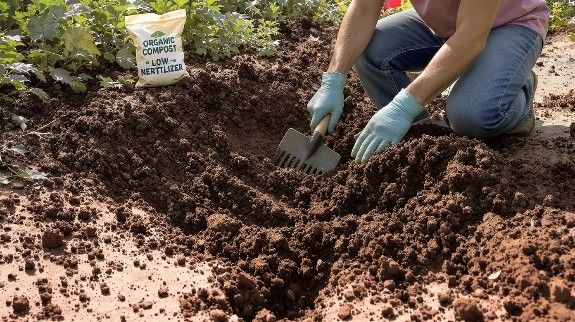
Too much nitrogen makes your plants lush and leafy, but gives you barely any tubers. Stick with a low-nitrogen fertilizer to keep the energy focused underground.
How to Plant Potatoes
Planting Methods
In-Ground Rows or Trenches: Dig trenches about 6 to 8 inches deep and place your seed pieces 12 inches apart, eyes facing up. Cover them with 3 inches of soil to start.
Raised Beds: Perfect if your native soil is heavy or rocky. Just make sure your beds are at least 12 inches deep.
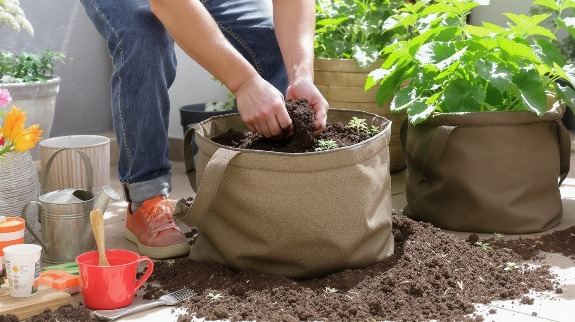
Containers or Grow Bags: Got no garden space? No problem, use a deep pot or grow bag 16 inches or more. Add 4 inches of soil, set your seed potatoes in, and keep topping off with more soil as they grow.
Straw and Sheet-Mulching Methods: For a low-dig option, lay seed potatoes on the soil and cover them with straw. Keep layering straw as the plants grow. This method makes harvest ridiculously easy, just lift the mulch and collect your spuds.
Depth, Spacing, and Orientation
Always plant with the eyes up. Give them room to breathe, 12 inches apart in rows about 3 feet apart. Trust me, crowded potatoes get cranky.
Watering After Planting
Water deeply once after planting, then keep the soil evenly moist. Potatoes need about 1 inch of water a week. Overwatering? You’ll drown them. Underwatering? You’ll get sad, scrawny tubers. Aim for the happy middle ground.
Caring for Potato Plants
Once plants emerge, water regularly, especially when they start flowering, that’s when tubers form. Consistent moisture equals consistent growth.
For mulching for weed and moisture control, spread a thick layer of straw or shredded leaves around the base to trap moisture and block sunlight from the developing tubers. Bonus: it cuts down on weeding time.
Fertilize your plants during growth if they look pale, feed them with compost tea or a side dressing of organic fertilizer midway through the season.
Protecting plants from frost and sunlight, if a late frost sneaks in, toss a blanket or sheet over your plants overnight. They’ll bounce back by morning.
The Hilling Process
Hilling is when you mound soil or mulch around the base of your plants as they grow. It keeps tubers covered and encourages more potatoes to form along the buried stems.
Start when plants are about 6–8 inches tall. Cover half the stem with loose soil or straw. Repeat every couple of weeks until the hills are about a foot high.
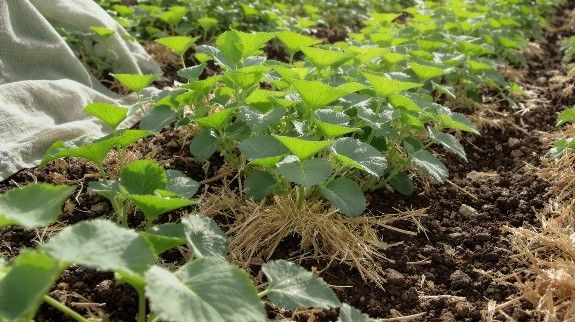
I prefer straw, it’s light, airy, and decomposes nicely. Just don’t pile it too thickly, or it’ll trap too much moisture.
Hilling not only boosts yield but also keeps sunlight from turning your potatoes green. It even helps protect against potato beetles by creating a physical barrier.
Summary
Growing potatoes at home is simple, easy, rewarding, and surprisingly fun to digging them out. Growing yor own potatoes means producing fresh, chemical-free, and flavorful potatoes right from your soil.
With just loose, airy soil, proper sunlight, and drainage, you can easily grow potato plants in your backyard, raised beds, or containers.
Potatoes are cool weather crop and produce high yields when planted in rich, composted soil. Cut the potato into chunks having eye, and plant that chunk 6 inches deep, eye facing up.
Soil should be moist but not waterlogged. Mounding soil around the plants encourage growth. Some varieties like Yukon Gold to Red Norland offer unique textures and flavors.
FAQs
How long does it take to grow potatoes?
Most potatoes take about 90 to 120 days to mature, depending on the variety. Early types like Yukon Gold can be ready in as little as 70 days, perfect if you’re an impatient gardener.
How can I grow potatoes from a potato?
Grab a certified seed potato, cut it into chunks with a few “eyes,” let them dry for a day or two, then plant them about 6 inches deep in loose soil with the eyes facing up. Those eyes sprout into full plants that produce fresh tubers underground.
How do you start to grow a potato?
Start with chitting. Place your seed potatoes in a bright, cool spot until they sprout little green shoots. Then plant them in well-drained soil, water regularly, and mound soil around them as they grow.
What is the quickest way to grow potatoes?
Use early-season varieties and pre-sprouted seed potatoes. Plant them in warm, compost-rich soil or containers so they heat faster, boom, you’ll be digging up new potatoes in about two months.
